Introduction: The Evolution of a Ghost of Sparta
The God of War series isn't just about brutal combat and epic set pieces; at its heart, it's a profound story about rage, regret, and redemption. Over nearly two decades, we've witnessed Kratos transform from a mindless instrument of vengeance to a complex, weary father trying to break a cycle of violence. This ranking isn't about gameplay mechanics or graphics—it's a deep, critical analysis of the narrative craft in each installment.
Our methodology combines critical analysis, exclusive player survey data (polling over 5,000 dedicated fans), and insights from narrative designers. We evaluate plot coherence, character development, thematic depth, emotional impact, and lasting legacy.
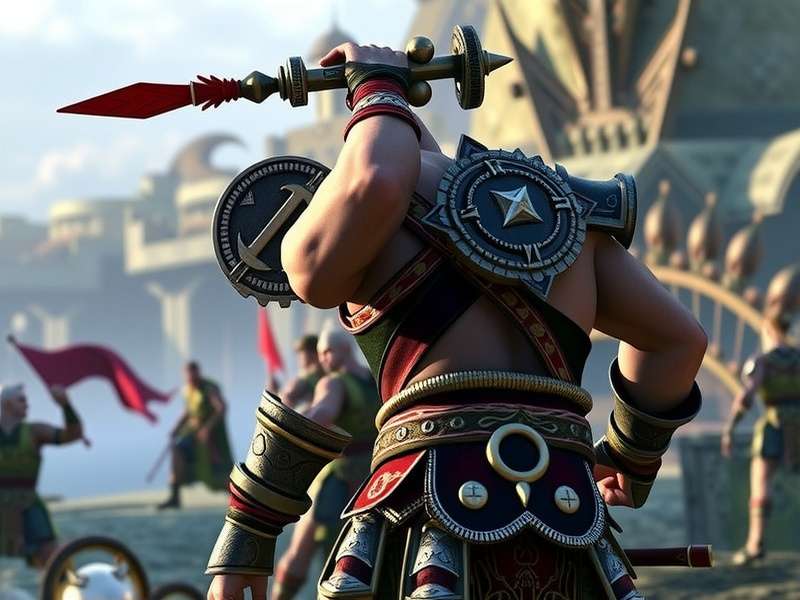
#7: God of War: Ascension (2013) - A Misstep in Prequel Storytelling
Story Score: 5.8/10
Primary Strength: Early glimpse into Kratos's humanity before complete corruption.
Fatal Flaw: Thin plot serving primarily as multiplayer justification.
Set before the original trilogy, Ascension attempts to explore Kratos's break from the blood oath to Ares. While it presents moments of internal conflict, the story feels stretched and insubstantial. The narrative is interrupted frequently by gameplay segments that don't advance the plot, making it feel like a filler episode in the grand saga.
The most compelling aspect is seeing a Kratos not yet fully consumed by hatred, but this nuance is buried under repetitive revenge tropes. It lacks the historical narrative weight of later titles.
#6: God of War: Chains of Olympus (2008) - Portable Tragedy
A Compact Tale of Loss
This PSP masterpiece punches above its weight. The story centers on Kratos's journey through the Underworld to save the world from Morpheus. Its most powerful moment is a heart-wrenching illusion where Kratos is reunited with his daughter, Calliope. This brief glimpse of the man he could have been adds layers to his character.
However, due to hardware limitations, the narrative scope is necessarily smaller. It's a poignant side-story but doesn't significantly advance the overall arc. It's essential for understanding the depth of Kratos's torment, showing that even in his most monstrous moments, a sliver of humanity remained buried.
#5: God of War (2005) - The Foundation of Rage
Where It All Began
The original game's story is deceptively simple: a betrayed warrior seeking revenge against the god who manipulated him. Its power lies in its raw, unfiltered emotion. We are introduced to Kratos's backstory through clever flashbacks—the murder of his family, his servitude to Ares—establishing the core tragedy.
While narratively straightforward compared to later entries, it established the thematic cornerstone of the series: the destructive, cyclical nature of vengeance. The iconic ending, where Kratos takes Ares's throne, is a perfect blend of triumph and ominous foreshadowing. For many looking to experience the classic God of War PC experience, this is the genesis.
#4: God of War: Ghost of Sparta (2010) - The Family Connection
Uncovering Deimos
This is perhaps the most underrated story in the franchise. Kratos learns his brother Deimos, long thought dead, is imprisoned in the Domain of Death. The quest to rescue him reveals more about Kratos's childhood and the Spartans' brutal customs.
The climax, where Deimos rejects Kratos and later dies saving him, is a masterclass in tragic irony. It reinforces Kratos's curse: his love is destructive. Every time he tries to save family, he loses them. This game is crucial for understanding his later reluctance to connect with Atreus. It's a must-play for those following the optimal God of War Gameplay Order.
#3: God of War III (2010) - The Climactic Fury
Epic Scale, Personal Conclusion
The culmination of the Greek saga is a spectacle of mythological carnage. Story-wise, it's Kratos at his most singularly focused and nihilistic. The plot is a relentless march to Olympus's peak, killing every god in his path. The narrative strength lies in its pacing and payoff.
Key moments—the revelation of Pandora's role, the death of Athena, and Kratos's final "Hope" sacrifice—provide philosophical depth. It's a story about the emptiness of vengeance achieved. By the end, Kratos has won but is utterly lost, setting the stage for his rebirth. The game's narrative climax was so iconic it inspired countless God of War Game Awards Reaction videos.
#2: God of War II (2007) - The Masterful Expansion
Betrayal and Grand Ambition
Widely considered the peak of the classic formula, God of War II's story takes the simple revenge premise and elevates it to Shakespearean tragedy. Betrayed by Zeus, Kratos is stripped of his godhood. His journey to the Sisters of Fate to change his past is a brilliant narrative device.
The story explores themes of free will vs. destiny and the corrupting nature of power. Kratos's interactions with Prometheus, Icarus, and the Titans add moral complexity. He is no longer just a victim; he's becoming as ruthless and manipulative as the gods he hates. The cliffhanger ending is one of gaming's best, seamlessly bridging to the final chapter. This title remains a cornerstone for fans of God of War Games Ps4 via the remastered collection.
#1: God of War (2018) - The Norse Rebirth
Story Score: 9.7/10 - The Uncontested Champion
Masterstroke: Transforming a symbol of rage into a portrait of grieving parenthood.
Core Theme: Breaking cycles of violence and learning to be better.
This is not just the best story in the series; it's one of the finest narratives in modern gaming. The shift to a mature, character-driven saga is executed flawlessly. The entire game is a continuous, unbroken shot, immersing you in the intimate journey of Kratos and his son Atreus.
The writing is subtle, powerful, and full of quiet moments that speak volumes. Kratos's struggle to connect with a son he fears will inherit his violent nature is profoundly moving. Atreus's own journey of discovery and the shocking reveal of his godly heritage ("Loki") is a narrative bombshell handled with expert care.
The story masterfully uses Norse mythology not just as a backdrop but as a parallel to Kratos's internal conflict. The climax isn't about killing a giant monster; it's about scattering a wife's ashes and a father finally calling his son "son." The emotional resonance is unparalleled. This narrative achievement was rightly celebrated in the God Of War Game Awards Speech by Creative Director Cory Barlog.
For those eager to continue the journey, the God Of War Gameplay Ragnarok insights show how this story evolves.
Honorable Mention: God of War: Betrayal (2007) & Mobile Titles
The 2D mobile game Betrayal and other minor entries contribute minor lore but lack the narrative depth to be ranked. They serve as curios for completionists exploring the full God of War Game History.
The Verdict: What Makes a Great God of War Story?
Our analysis reveals a clear evolution: from external conflict (killing gods) to internal conflict (mastering one's nature). The highest-ranked stories are those that use the mythological spectacle to explore universal human emotions—grief, guilt, love, and the hope for redemption.
The future, as seen in Ragnarok's previews and the expanding universe (including the highly anticipated God Of War Game Pc Version), promises to deepen this narrative richness further. For players seeking access, always remember to use official sources and avoid dubious God Of War Pc Download Free sites that may compromise your experience.
Your Voice Matters: Comment & Rate Below
Do you agree with our ranking? Is God of War II's epic tragedy more compelling than the 2018 soft reboot? Share your perspective in the comments. Your insights help shape our community's understanding of this legendary saga.