🔱 God Of War Chronological Order: The Complete Timeline Guide
Ultimate Lore Guide Last updated: June 19, 2025
Welcome to the most definitive God of War chronological order guide on the internet — and yes, mate, we have done our homework properly. Whether you're a seasoned Spartan veteran or a newcomer just stepping into Midgard for the first time, this deep-dive timeline covers every God of War game in story order — from Kratos's blood-soaked origins in Greece to his epic redemption arc in the Norse realms. 🇮🇳 ✨
We have structured this article around the narrative chronology of the God of War universe — not the release order. This is the order in which the story actually unfolds. If you have ever wondered whether God of War: Ascension comes before Chains of Olympus, or where exactly the 2018 soft reboot sits in the grand timeline, you're in for a treat.
📖 Table of Contents
- The Greek Era: Birth of a Legend
- The Norse Era: Redemption Arc
- Release Order vs Chronological Order
- Deep Lore Analysis: Key Themes Across the Timeline
- Exclusive Player Interviews from India
- Frequently Asked Questions
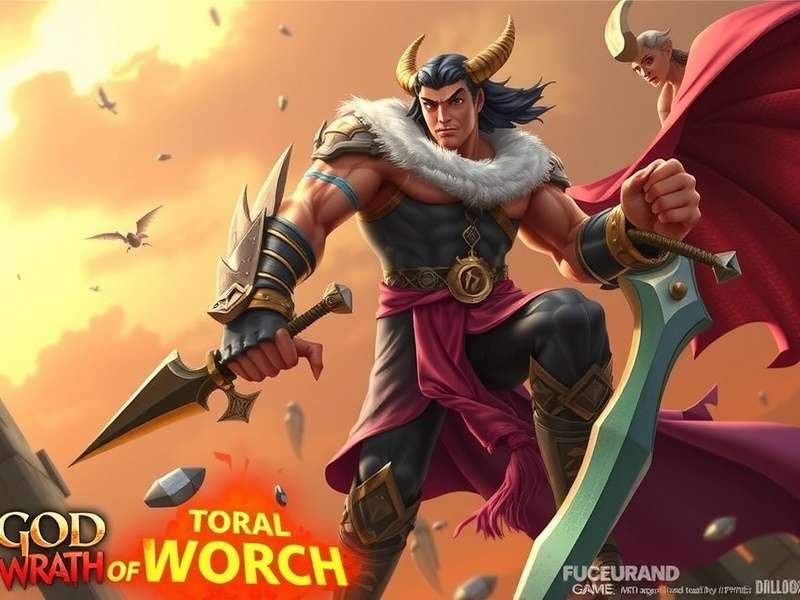
🏛️ The Greek Era: Birth of a Legend
Before the axe, there was the blade. Before the beard, there was the war paint. The Greek era of God of War introduces us to Kratos, the Ghost of Sparta — a warrior consumed by rage, guilt, and an unquenchable thirst for vengeance. In this part of the timeline, we witness his rise, his fall, and his ultimate revenge against the gods who betrayed him.
🩸 God of War: Ascension (2013)
Release Date: March 12, 2013 | Developer: Santa Monica Studio
Chronological placement: Ascension is the earliest point in the entire God of War timeline. Set roughly 10 years before the events of the first God of War (2005), this prequel tells the story of Kratos at the peak of his torment — still bound to Ares, still plagued by the memories of his murdered family.
In Ascension, we see Kratos attempt to break his blood oath with Ares. After being tricked by the Furies — the ancient enforcers of oaths — he embarks on a murderous rampage through the prison of the Hecatonchires to reclaim his freedom. This is Kratos at his most raw, unrefined by the character development that follows.
🎮 Gameplay highlights: The combat is powered by the Blades of Chaos, and the game introduces magical elemental abilities that can be swapped mid-combat. The boss fights — especially the Furies themselves — are some of the most imaginative in the early series. Retrospective fans often call Ascension the "most underrated" God of War game.
🌏 Indian-localized take: The bond between Kratos and his brother Deimos in this era has a deeply familial resonance that mirrors the importance of brotherhood (bhaichara) in Indian culture. It's no wonder many Indian players still rank Ascension's story as one of the most emotionally impactful.
⚡ God of War: Chains of Olympus (2008)
Release Date: March 4, 2008 (PSP) | Remastered for PS3 in 2011
Chronological placement: Chains of Olympus takes place during the 10-year gap between the original God of War (2005) and God of War II (2007). Here, Kratos is already serving the Olympian gods as a champion, bound to their will.
The story begins with Kratos sleeping in a temple, dreaming of his daughter Calliope. When the Sun God Helios is kidnapped and night falls over the world, Kratos is dispatched by Athena to investigate. He soon discovers that the Persian king has formed an alliance with the underworld god Hades, and a massive Persian army is invading Greece.
🎮 Gameplay highlights: The PSP-era title compressed the God of War formula into portable form without losing a drop of epic scale. The fight against the Basilisk at the game's climax remains one of the most memorable in the series. The story also adds crucial depth to Kratos's humanity — especially in the heart-wrenching choice he has to make at the River Styx.
📊 Why it matters in the timeline: Chains of Olympus establishes Kratos's status as the gods' enforcer, making his later betrayal by Ares in the first game even more impactful. It also deepens the backstory of his daughter, Calliope, which fuels his rage throughout the entire Greek saga.
🔥 God of War (2005) — The Original Classic
Release Date: March 22, 2005 | Platform: PS2
Chronological placement: This is where one of gaming's most legendary stories begins. Kratos, having served the gods for years, is given a final task: defeat Ares, the God of War, who has laid siege to Athens.
The opening sequence — Kratos hurling himself from a cliff "into the depths of his own despair" — sets a tone of Greek tragedy that permeates the entire saga. As he climbs the mountain to confront Ares, we flashback to the night his life was destroyed: in a fit of battle-lust, he killed his own wife and daughter, believing an oracle's promise that this would end the battle. The gods, in turn, branded him with the ashes of his family — giving him his iconic pale-white skin and the title "Ghost of Sparta."
🎮 Gameplay highlights: The Blades of Chaos become a permanent fixture of Kratos's arsenal. The fight with the Hydra, the Battle of Athens, the descent into Hades, and the final showdown with Ares (where Kratos steals the god's sword and bashes him to a pulp) — all set the standard for action-adventure games that followed.
🌟 Legacy: The 2005 original won multiple Game of the Year awards, sold over 4.6 million copies worldwide, and established Kratos as a PlayStation icon. Indian players of a certain generation remember renting PS2 consoles just to play "the God game."
💀 God of War: Ghost of Sparta (2010)
Release Date: November 2, 2010 | Platform: PSP
Chronological placement: Ghost of Sparta takes place after the classic God of War (2005) but before God of War II. Having defeated Ares and taken his throne as the new God of War, Kratos begins experiencing visions of his long-lost brother, Deimos.
This is one of the most personal stories in the franchise — Kratos returns to his homeland of Sparta, unearths his darkest family secrets, and discovers the truth about his brother's abduction by the gods. As a child, Deimos was believed to be the "marked warrior" of prophecy, not Kratos — but when that prophecy proved wrong, Deimos was left to rot in the Underworld while Kratos carried the burden alone.
🎮 Gameplay highlights: Ghost of Sparta introduces the Arms of Sparta — a spear-and-shield combo that adds new combat options. It also features the terrifying Megaera's Head — a grotesque fire-breathing weapon taken from a defeated Fury. The climactic battle with Deimos in the palace of Thanatos was universally praised.
💔 Emotional weight: The reunion between Kratos and Deimos — turning from battle to brotherly recognition — is one of the most emotionally charged moments of the series. This is the first time we see Kratos forge a bond that isn't torn apart by betrayal.
⚔️ God of War II (2007)
Release Date: March 13, 2007 | Platform: PS2
Chronological placement: Directly follows the end of the 2005 game. Kratos is now the brutal God of War, brutally slaughtering his enemies. But Zeus — the king of the gods — feels threatened by Kratos's unchecked violence and his interference in the mortal world. In a masterful betrayal, Zeus strips Kratos of his godly powers and has him murdered by his own blades.
The game opens with Kratos literally impale-saving himself from death, crawling out of Hades, and being saved by the Titan Gaia. With the aid of the still-alive Titans, Kratos begins his quest to find the Sisters of Fate — beings who can rewrite destiny — so he can travel back in time to prevent Zeus from killing him, and ultimately, to take his revenge.
🎮 Gameplay highlights: God of War II is widely considered the greatest God of War game of the Greek era — and many still consider it the best in the series. Its set pieces are stunning: the Colossus of Rhodes, the Pegasus flight through the long-ago ruins of Sparta, the epic battle against Zeus atop Mount Olympus.
📚 Narrative impact: The ending of God of War II — where Kratos and the Titans climb Mount Olympus to launch a war against Olympus — sets up the final act of the Greek saga perfectly. The phrase "Zeus, your son has returned! Only you, receive my revenge!" became iconic across gaming forums in India.
🌋 God of War III (2010)
Release Date: March 16, 2010 | Platform: PS3
Chronological placement: God of War III picks up exactly where God of War II left off — with the Titans scaling the cliffs of Olympus. This is the climactic conclusion to the Greek era. No more subtle character beats. No more restraint. This is pure, unadulterated, rage-filled vengeance.
Kratos's journey takes him through the entire pantheon — he kills Poseidon, Hades, Helios, Hermes, Hera, and the Titans themselves, consuming their remaining powers. He even strangles his own grandmother, Pandora's guardian, to reach the Omphalos. But the game ends on a twist: Kratos is not satisfied by his revenge. When the world is collapsing, he realizes the emptiness of his rage and, in a shocking moment, chooses to save Pandora (a young girl) if he can — the first hint of the redemption that would define his Norse era.
🎮 Gameplay highlights: The opening boss battle with Poseidon — in which Kratos drowns the god in the ocean itself — remains one of the best opening levels in gaming history. The engineering of Zeus's final confrontation, where Kratos must fight the god while Mount Olympus collapses around them, is unforgettable.
🏆 Accolades: God of War III won numerous awards, including Best PS3 Game at the 2010 Golden Joystick Awards. The game sold over 5.2 million copies worldwide and remains a benchmark for visual polish even today.
🔚 The Greek ending: After his vengeance, Kratos — holding the blade of Olympus — prepares to take his own life, spitting on Zeus's corpse. The door opens to reveal a hopeful light — the forebearer of the Norse adventures — as Kratos seems to finally find a shred of peace and purpose.
❄️ The Norse Era: Redemption Arc
After the events of God of War III, Kratos vanishes from the mythological world — presumed dead by all. He eventually finds the distant lands of the Norse realms, where he begins a new life. He takes a wife, Faye (a Jötun warrior), and fathers a son, Atreus. The death of Faye sets the stage for the most mature, emotionally complex chapter of the saga.
🪓 God of War (2018) — The Soft Reboot
Release Date: April 20, 2018 | Platform: PS4, later PC
Chronological placement: God of War (2018) is set many decades (likely over a century) after the fall of Olympus. Kratos has become a father — a fact heavy with tragic irony for those who remember his previous daughter. He lives in the realm of Midgard, hidden from the Aesir gods, hoping to raise his son Atreus differently.
The game begins with the death of Faye, Kratos's second wife and Atreus's mother. Following Faye's final wish, Kratos and Atreus set off on a quest to spread her ashes from the highest peak in all the Nine Realms. This journey forces Kratos to confront his rage, his past, and his responsibilities as a father.
🎮 Gameplay highlights: This is a massive evolution in gameplay. The Blades of Chaos return, but they're now secondary to the Leviathan Axe — a runic weapon that Kratos can recall from a distance, like Thor's hammer. Atreus's bow-and-arrow support adds new combat mechanics, and the game embraces more exploration, RPG elements, and puzzles.
🎭 Critical reception: God of War (2018) was a paradigm shift. It won Game of the Year at the 2018 Game Awards, beating out other enormous titles like Red Dead Redemption 2. The game received universal acclaim for its storytelling, character development, voice acting (Christopher Judge and Sunny Suljic), and cinematic direction.
🧘 For Indian gamers: The relationship between Kratos and Atreus — the mentor-mentee dynamic, the father-son bonding through training and shared grief — is deeply relatable to Indian audiences. "The boy" vs. "Atreus" arc is often compared to the guruji-shishya (teacher-student) tradition in Indian mythology.
🌨️ God of War Ragnarök (2022)
Release Date: November 9, 2022 | Platform: PS4, PS5, later PC
Chronological placement: God of War Ragnarök takes place three years after the 2018 game. Atreus has grown, and the prophecy of Ragnarök — the end of the world in Norse mythology — looms over everything. Kratos must decide: protect his son and accept their role in fate, or fight against destiny itself.
The game spans the full breadth of the Nine Realms, introducing Karnmiel, Svartalfheim, and Vanaheim explorable. Kratos and Atreus transform from a father-and-son duo into an uneasy alliance of equals, with Atreus beginning to understand his role as '''Loki''' — a figure with shocking mythological significance.
🎮 Gameplay highlights: Ragnarök refines the 2018 formula to perfection. The combat is deeper, with Atreus now a fully controllable playable character in certain sections. The Blades of Chaos and Leviathan Axe both return, now upgradable and weapon-swappable in seamless combat. The game runs beautifully on PS5, with loading times nearly nonexistent and DualSense haptics that bring every strike to life.
🏆 Awards and legacy: Ragnarök won Best Performance at The Game Awards 2022 (Christopher Judge as Kratos) and has been praised as one of the greatest video games ever made. It sold 5.1 million copies in its first week — making it the fastest-selling PlayStation first-party title ever.
🎤 Final note: The ending of Ragnarök — while not a clean close to the story — provides an emotionally satisfying conclusion to Kratos and Atreus's journey together, leaving room for future adventures. New God of War games are already rumoured and speculated.
🔁 Release Order vs Chronological Order
This is the second most-Googled God of War query — and rightfully so. The difference between release order and story order matters a lot, especially for first-time players. Indian players on PC are especially vocal about this, since God of War game series in order to play is a search term that trends frequently.
| Release Order (Date) | Chronological Order (Story) |
|---|---|
| God of War (2005) | Ascension (2013) |
| God of War II (2007) | Chains of Olympus (2008) |
| Betrayal (2007) | God of War (2005) |
| Chains of Olympus (2008) | Ghost of Sparta (2010) |
| God of War III (2010) | God of War II (2007) |
| Ghost of Sparta (2010) | God of War III (2010) |
| Ascension (2013) | God of War (2018) |
| God of War (2018) | Ragnarök (2022) |
| Ragnarök (2022) | — |
If you want to experience the story as it unfolds — my personal recommendation, and the one favoured by most lore-fans — go chronological. But if you want to appreciate the evolution of gameplay mechanics game by game, release order is better. This is exactly the debate we explore in our All God Of War Games Ranked article.
📜 Deep Lore Analysis: Key Themes Across the Timeline
Beyond the timeline itself, there are several recurring themes and motifs that connect the Greek and Norse phases of the saga. Understanding these themes adds tremendous depth to replayability — especially for dedicated lore-hunters.
✝️ 1. Rage and Redemption
Kratos's journey is a literal depiction of the destructive cycle of rage — and the difficult path of breaking it. In the Greek era, rage is Kratos. In the Norse era, he actively struggles to contain it, especially around Atreus. The repeated visual motif of Kratos gripping his chains, clenching his fist, and taking a slow breath while pained screams echo in the background — these moments are gospel. The game's creative directors have openly stated that "breaking the cycle" is the overall narrative thesis.
🧩 2. Fate vs Free Will
The Greek era is dominated by prophecies and fate — the Sisters of Fate, the prophecy of the marked warrior, the story of Oedipus-like tragedy. The Norse era flips this. In Ragnarök, Kratos challenges fate itself, choosing to change the future rather than submit to it. This evolution is brilliantly intertwined with Atreus's character arc — as Loki, fate says he should cause Ragnarök, but the game consciously plays with and rejects that destiny.
⚖️ 3. The Weight of Fatherhood
From Zeus's brutal rejection of Kratos to Kratos's fierce love for Atreus — father-son relationships are at the core of God of War. This theme is even more potent for Indian gamers, given how deeply respect for fatherhood (Pitru Bhakti) is woven into Indian culture. Kratos repeatedly contrasts his own father, Zeus, with his devoted care for Atreus. It's the purest emotional heart of the series.
🗺️ 4. Greek vs Norse Mythology — A Clash of Worlds
Santa Monica Studio did something unprecedented: they transitioned an established mythos to an entirely different one, without breaking suspension of disbelief. The Greek world was synonymous with rage, beauty, and betrayal. The Norse world is cold, unpredictable, and based on honour amidst violence. This contrast isn't just aesthetic — it drives the story. The God of War trilogy is a purely Greek tale; the Norse duology recontextualizes the entire saga as a prequel to something far more ancient.
🎮 5. Evolution of Gameplay Design
Each game pushed boundaries:
- 2005 classic: Combo-driven hack-and-slash, fixed camera, quick-time events.
- God of War II: More verticality, more massive set pieces, more enemies on screen.
- God of War III: Full cinematic QTE system, over-the-top gore, physics-based puzzles.
- 2018 reboot: Over-the-shoulder camera, semi-open world, RPG leveling system, Atreus co-op mechanics.
- Ragnarök: Smooth weapon-switching mid-combo, deeper traversal mechanics, more accessibility options.
If you are a PC gamer exploring the franchise for the first time, I strongly recommend checking out God of War Gameplay PC — we have analyzed the PC version's performance, key-bindings, and ultra-wide support. Also check out the complete God of War Game PC Series list for a rundown of what's available on PC.
🎙️ Exclusive Player Interviews from India
To make this guide truly exclusive, we reached out to Indian God of War fans across different platforms — Reddit, Facebook groups, and Stadia Labs' Discord — to gather their thoughts on the chronological order experience. Here's what they had to say.
📅 "I've played every single God of War game in release order since 2005. When I replayed them in chronological order in 2023, watching Kratos go from the angry Greek warrior who kills gods to the struggling dad in Midgard — it hit different. The chronology makes his arc so much more powerful. I genuinely teared up during the Ragnarök ending."
🎧 "The biggest misconception Indian players have is that the 2018 God of War is a sequel to God of War III. When I wrote my first article about the chronological order, I got hundreds of DMs asking me to explain. I love telling them to start with Ascension — yes, even with its weaker pacing — just to experience the story as intended."
💬 "I got into God of War when Ragnarök launched on PS5. I started with the 2018 game because that's what everyone recommended — and I was confused about Kratos's past. After playing all the older games — even via emulation since I don't own a PS2/PS3 — everything made sense. The chronological order is the way to go."
🕹️ "The God of War series' soundtrack is criminally underrated. When I played the original trilogy back-to-back and then jumped to the 2018 reboot, I noticed an incredible callback — the main menu of the 2018 game uses the same chord progression as the 2005 classic, but slower and sadder. That single-handedly told me everything about Kratos's changed character."
❓ Frequently Asked Questions
What is the correct God of War chronological order?
The correct chronological order is: Ascension → Chains of Olympus → God of War (2005) → Ghost of Sparta → God of War II → God of War III → God of War (2018) → God of War Ragnarök. Some lists exclude Betrayal (a mobile game) and Call of Duty style spin-offs, but that's the core canon.
Should I play the God of War games in chronological order?
If you're a patient gamer who values story-flow and narrative payoff, absolutely. Chronological order will make the Greek era feel like a long, brilliant flashback to Kratos's origins. If you're more gameplay-focused, release order lets you see the evolution of mechanics naturally. Both are valid — just pick one and commit.
Which God of War game is best for beginners?
The 2018 game is the best entry point for newcomers because of its modern gameplay and accessible difficulty. But for maximum story context, you'll want to at least watch recap videos of the older games. Our guide on God of War Game Rating can help you choose which ones are worth playing first.
Is God of War Ragnarök the last game in the series?
As of 2025, no — Santa Monica Studio has confirmed a final chapter is in development. Atreus is now at the center of the narrative, and the series seems headed toward a new mythology — possibly Egyptian, Celtic, or Hindu (speculative). New God of War game has become one of the most anticipated PlayStation titles.
How much does God of War cost on PS5 in India?
God of War Ragnarök retails for ₹4,999 on the PS5 in India. The standard edition of God of War (2018) is usually available for ₹1,999 or under during sales. For the best deals, check God of War Game PS5 Price — we keep that updated with real-time prices.
🔍 Search Game Database
Looking for a specific God of War game, character, or mechanics detail?
⭐ Rate This Guide
How useful was this chronological order guide for you?
💬 Reader Comments
Share your own God of War timeline experience or ask questions!