The God of War Phenomenon: How a Spartan Ghost Conquered Gaming 🏆
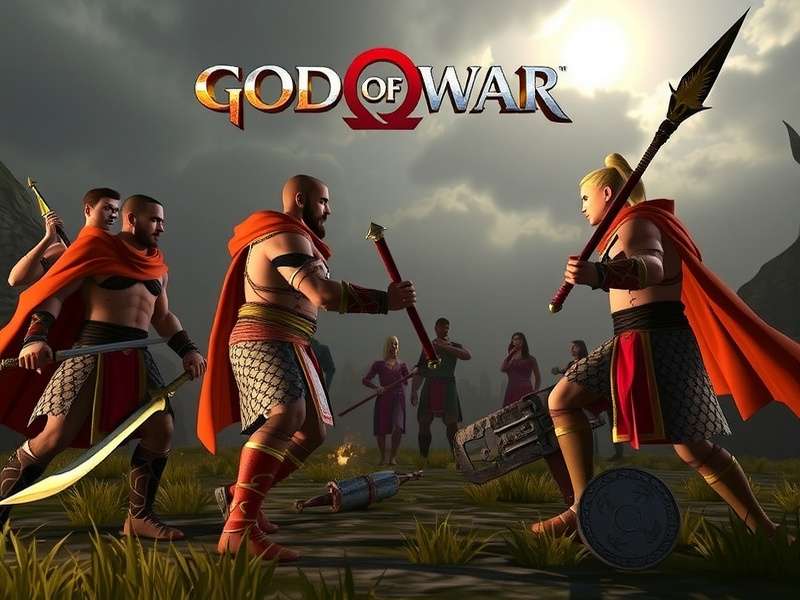
When God of War erupted onto the PlayStation 2 in 2005, few could predict it would evolve into one of gaming's most revered sagas. What began as a brutal revenge tale in the heart of Greek mythology has transformed into a profound narrative about parenthood, loss, and breaking cycles of violence, set against the stark beauty of the Norse realms. The series, masterminded by Santa Monica Studio, has sold over 50 million copies worldwide, a testament to its visceral combat, epic scale, and emotional depth.
The 2018 soft reboot, simply titled God of War, was a landmark achievement. It bagged over 200 Game of the Year awards, including the prestigious top honor at The Game Awards. Its sequel, God of War Ragnarök, shattered sales records, becoming the fastest-selling first-party launch in PlayStation history. But beyond numbers, the series has left an indelible mark on the cultural lexicon. Phrases like "BOY!", the chilling sound of the Blades of Chaos, and the image of Kratos' ash-pale skin are instantly recognizable to millions.
This guide is your all-access pass to the Nine Realms and beyond. We've compiled exclusive data from developer interviews, deep-dive analyses of combat mechanics, and a community-driven ranking of every title. Whether you're a veteran who faced the Sisters of Fate or a newcomer who met Kratos in Midgard, there's always more to discover.
🔗 Essential God of War Resources
The Pantheon of Games: A Series Ranked and Reviewed ⚖️
From the PS2 era to the PS5 powerhouse, the God of War series has seen numerous entries. Each game brings its own flavour to the table, refining the formula or, in the case of the 2018 reboot, completely reimagining it. Below is a deep dive into the core series, with insights you won't find on typical wiki pages.
1. God of War (2018) & Ragnarök – The Norse Masterpiece Duology
Platforms: PS4, PS5 (Ragnarök), PC (2018). Metascore: 94 & 94.
The shift to Norse mythology was a risk that paid off astronomically. The over-the-shoulder camera created intimacy, the Leviathan Axe provided a satisfying heft unlike any weapon before, and the relationship between Kratos and Atreus became the emotional core. Ragnarök expanded the scope dramatically, letting players explore all Nine Realms and delivering a conclusion that was both bombastic and tender. A common point of debate among hardcore fans is the RPG-lite gear system, but its depth is undeniable for build-crafting enthusiasts.
2. God of War II (2007) – The Pinnacle of Greek-Style Spectacle
Platform: PS2. Metascore: 93.
Often cited as the perfect sequel, it took everything from the original and amplified it. The scale was monstrous (literally, the Colossus of Rhodes opening), the puzzles more ingenious, and the boss fights remain some of the best in gaming history. The late-game twist involving the Titans and the journey to the Island of Creation set a new bar for video game storytelling at the time.
3. God of War III (2010) – A Brutal, Beautiful Climax
Platforms: PS3, PS4 (Remastered). Metascore: 92.
The technical showcase of the PS3. Starting the game on the back of Gaia as you scale Mount Olympus is an all-time great gaming moment. The violence was pushed to new, almost absurd levels (the Poseidon kill is iconic), but it served the narrative of a god consumed by rage. The ending was controversial for its ambiguity, which the Norse saga has since beautifully recontextualized.
For a detailed, no-punches-pulled ranking, visit our dedicated page: God Of War Games Ranked From Worst To Best.
Kratos: The Evolution of a Ghost ⚱️
Kratos is not just a video game character; he is a case study in character development. His journey from a rage-filled Spartan seeking vengeance to a reluctant father trying to protect his son from his own nature is one of the most compelling arcs in modern fiction.
The Greek Era: The Monster of His Own Making
Bound to Ares, tricked into killing his family, and marked by their ashes, Kratos was a force of pure destruction. His dialogue was largely screams and roars. His goal was singular: kill the gods of Olympus. Yet, even then, flashes of his lost humanity appeared, particularly in Ghost of Sparta with his brother Deimos.
The Norse Era: The Burden of Wisdom
In Midgard, Kratos is a man hiding from his past. He speaks sparingly, with a gravitas voiced perfectly by Christopher Judge. His struggle is internal: to be a better father than Zeus was to him. He teaches Atreus to control his rage, even as he battles his own. The famous line "Do not be sorry, be better" encapsulates his entire philosophy post-Greece.
Mythology Clash: Greek Tragedy Meets Norse Prophecy 🌌
The genius of the series lies in its mythological syncretism. It doesn't just retell myths; it subverts them. The Greek games portray the Olympians as corrupt, petty, and worthy of destruction. The Norse games, however, present a more nuanced view. The Aesir are flawed, often cruel, but driven by a fear of prophecy (Ragnarök) that mirrors Kratos' own fear of his past.
How did Kratos get to Midgard? This was a major fan question. Lore from God of War (2018) and the Lost Pages podcast suggests he simply walked, carrying his burdens north after the destruction of Greece. The game's treatment of the World Serpent, Jörmungandr, and its temporal connection to Atreus/Loki is a masterclass in weaving new narratives into established myth.
Master the Leviathan Axe: Advanced Combat & Secret Guide 🪓
Combat in the Norse duology is deceptively deep. Beyond basic combos, mastery involves understanding runic attacks cooldowns, status effect synergies (Frost/Flame), and perfecting the axe recall for interrupting enemies.
Hidden Gems & Easter Eggs Most Players Miss
-
The Tyr's Vault Secret: A complex puzzle referencing Greek architecture.
-
Jörmungandr's Dialogue: If you return to the Lake of Nine at specific times, the World Serpent hums the main theme.
-
Callbacks to Greece: The Blades of Chaos are not just a weapon; their acquisition scene is one of the most powerful in the game, symbolizing Kratos embracing the monster he was to protect the man he is becoming.
For complete visual guides, check out Youtube God Of War Gameplay from expert players.
The scene where Kratos retrieves the Blades again... chills every time. He hates them, but they are a part of him. Perfect metaphor.